

This op-ed was originally published by the Omaha World-Herald.
I know what it's like as a working mother to relocate to a new city for a job and immediately need to find reliable, high-quality child care.
Access to child care impacted my family in ways beyond just my work schedule. Those programs became a vital source of support for my family. Providers cared for and taught our children, but they also connected us to other local families, community activities, and resources such as pediatricians.
Child care is one of the most important decisions many families will make—and yet many parents find little systemic support.
I keep thinking about child care and how we can support young professionals as the headlines and concerns continue to pile up over Omaha's brain drain problem.
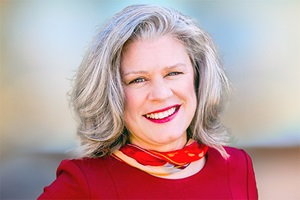 Debora Wisneski
As reported by the Omaha World-Herald, recent analyses from the Greater Omaha Chamber and Aksarben Foundation show Omaha is falling behind peer cities like Kansas City, Denver, Tulsa, Minneapolis, and others in job, wage, and workforce growth.
Responding to these alarm bells, local leaders quickly assembled task forces and have held events to untangle the root issues and make the city and the state more competitive.
As the John T. Langan Community Chair in Early Childhood Education at the University of Nebraska at Omaha and the Buffett Early Childhood Institute, I urge leaders to keep early care and education front and center during these discussions.
The whole community shares the benefits and positive outcomes of early care and education—so let's approach our problem-solving as a collective responsibility, too.
Attracting—and keeping—a college-educated workforce requires a community with the amenities and infrastructure to support how families live and work. For many young people and couples, child care is at the very top of this list. This is even more true for transplants moving to Nebraska without family nearby to pitch in.
Good jobs are not enough if workers can't find someone to care for their young children or a desirable place to live.
Omaha's recent push to improve amenities has proven wildly successful—look at the families that flock to the splash pad and playgrounds at the redesigned Gene Leahy Mall and Omaha riverfront. How can we continue to design public spaces that are family-friendly and prioritize learning through play?
The brain drain concerns are not new—Nebraska has long battled to keep its homegrown talent. Interestingly, data from the University of Nebraska at Omaha's Center for Public Affairs Research shows many former Nebraskans don't go far: they're relocating to cities like Denver, Kansas City, and Des Moines.
Buffett Institute data shows we still have work to do to ensure that every worker who needs child care can access it. Consider:
- Nebraska needs as many as 17,500 more child care spots to meet the potential need.
- The gap between the supply and potential need in Douglas and Sarpy Counties is more than 2,800 spots.
If child care is available, that doesn't mean it is affordable, even for middle-class families. A recent analysis found that child care for an infant and a 4-year-old costs Omaha families an average of $2,891 a month — nearly 50% of the city's median household income.
Businesses like Hudl and TMCO in Lincoln and Gallup and First National Bank in Omaha are opening or already offer on-site child care programs for workers.
This isn't a silver bullet—tying child care to employment can get tricky when workers leave or find new jobs—but quality child care must be a core component of any brain drain reversal plan.
Here's why: other states—our competition—are making serious progress on expanding child care availability.
New Mexico will become the first state to offer universal child care to families, regardless of income. Colorado offers up to 15 hours of free PreK. And just over the river, Iowa has launched new grants and expansion programs to increase child care slots and early educator wages.
This is a community issue that will require a community-level response from economic development boosters, businesses, universities, K-12 school systems, and more. And I want leaders to tap into the University of Nebraska's many early childhood resources, in addition to local philanthropists and public-private partnerships.
Businesses alone can't fight brain drain, and families and early educators alone cannot solve the long-entrenched issues of child care access and affordability.
Let's make Omaha not just the best place to work, but the best place to raise a family, too.
Debora Wisneski is a professor in teacher education in the College of Education, Health, and Human Sciences at the University of Nebraska at Omaha and the John T. Langan Community Chair in Early Childhood Education at the Buffett Early Childhood Institute. This essay reflects the views of the author and is not representative of the views of UNO.