

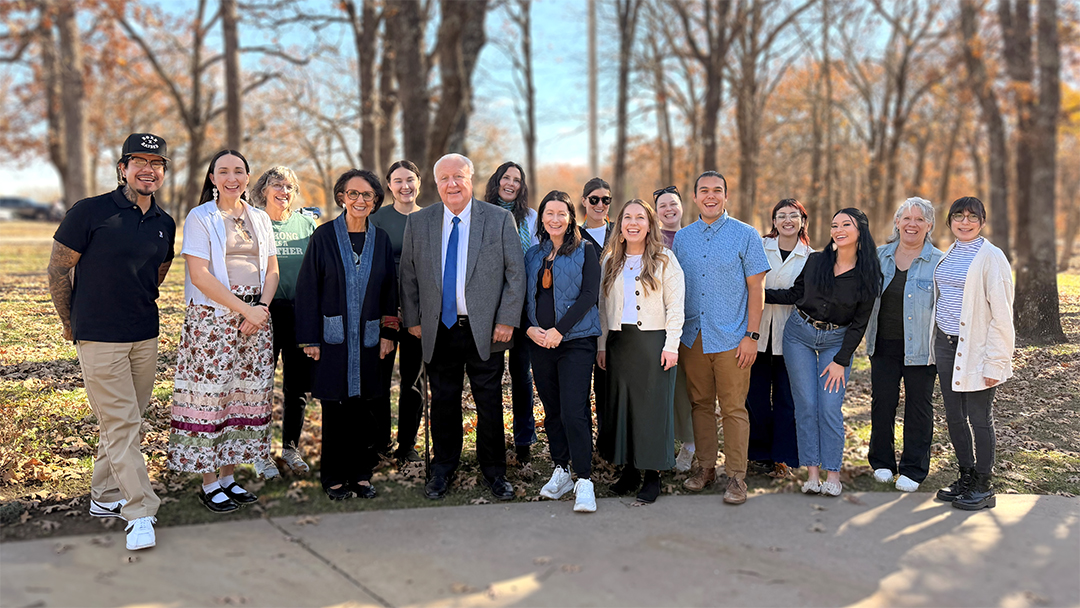
The Native Children's Research Exchange (NCRE) Scholars program was launched in 2012 to tackle a major problem in substance use prevention and mental health research: underrepresentation.
While the National Institutes of Health (NIH) was funding grants to address health priorities in Native American communities, including those designed to tackle addiction, the opioid crisis, mental health concerns, and suicide, Native Americans themselves made up just a tiny fraction of researchers leading the very projects aimed at helping their communities.
More than a decade later, the NCRE Scholars program is a success story, helping build the scientific workforce of Native American researchers addressing substance use and child development.
The program has sponsored 41 early-career Scholars across 14 cohorts. Alumni have become faculty members, psychologists, scientists, a Tribal epidemiologist—even leaders of their own nations.
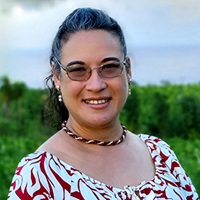 Sarah Momilani Marshall
Beyond the measurable achievements, program leaders and Scholars point to other crucial benefits: ongoing mentorship, career development, and a national network of fellow researchers who share ideas, collaborate on research projects, and grasp the nuances of existing in the dual worlds of academia and Native culture.
"More than one person echoed the sentiment that the NCRE network is more than just a position or a job," said Sarah Momilani Marshall, a Native Hawaiian researcher, 2019-22 NCRE Scholar, and an assistant professor in the Thompson School of Social Work & Public Health at the University of Hawai‘i at Mānoa. "These are relationships. These have been woven into the fabric of our lives now."
Representing Native American communities across the country
Funded by the National Institute on Drug Abuse, the program is led by three colleagues spanning two institutions: Michelle Sarche, the senior director of tribal research, policy, and partnerships at the Buffett Early Childhood Institute at the University of Nebraska, and Jerreed Ivanich and Nancy Whitesell, assistant professor and professor, respectively, at the Centers for American Indian and Alaska Native Health at the University of Colorado Anschutz Medical Campus.
Scholars are Ph.D. students, postdoctoral researchers, and investigators with backgrounds in psychology, sociology, neuroscience, public health, and other disciplines. They represent American Indian, Alaska Native, Native Hawaiian, and other Indigenous communities.
Research interests include substance use prevention and intervention, language and culture for healing, suicide prevention, domestic violence, school readiness, and more. Scholars receive research and training funds, collaborate on career plans, develop a paper or grant proposal, and engage in training, conferences, and mentoring.
"Meeting each Scholar where they are has been foundational to the program's success," said Whitesell. "Scholars join the program at different stages of their careers, from different disciplinary backgrounds, and with different interests related to child development and substance use research. NCRE Scholars provides both a common base of activities tailored to each Scholar's goals, and critically, an enduring community and research home."
Creating a Community of Native American Scientists
A career as a Native scientist can be a lonely pursuit. Lauren White, a 2021-23 NCRE Scholar, remembers veteran Native researcher Karina Walters saying that early in her career, she knew only one other Native student earning a Ph.D.
"Just the fact that there's more of us is huge," said Lauren White, an enrolled member of the Choctaw Nation of Oklahoma and an assistant professor at the University of Washington School of Social Work. "We now have a small base of scholarship to work from."
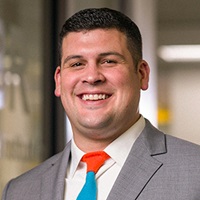 Evan White
And communities can benefit from researchers with a deeper understanding of the cultural practices and strong sense of community found in Native American and other Indigenous groups.
"A lot of the communities that we come from as Native people are suffering from a variety of environmental pressures that basically show up in our communities as health disparities or as mental health difficulties," said Evan White, an enrolled member of the Absentee Shawnee Tribe, a 2019-22 NCRE Scholar, and a principal investigator at the Laureate Institute for Brain Research in Oklahoma.
"But what's often overlooked is the flip side of that: the inherent strength and resilience in these communities," he continued. "And I think the reason is because we don't have many people who are fluent in both spaces, folks who are tuned in and connected to the community in a way that they can really understand the strengths and solutions, as well as scientific training in community-engaged research."
Evan White's research blends neuroscience with community-engaged mental health research and outreach. His lab uses electroencephalograms (EEGs) and other biological measurements to study brain activity that can provide insight into mental health disorders like anxiety and depression, and how protective factors like spirituality and close-knit social networks can support well-being.
Building Trust with Native American Communities
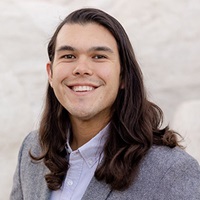 Jerreed Ivanich
Ivanich, who is Tsimshian and a member of the Metlakatla Indian Community in Alaska, calls himself the "poster child for NCRE."
Since joining as an NCRE STAR, an earlier level of involvement for high school through early Ph.D. students, he went on to become a Scholar in 2017-18. In true full-circle fashion, he now co-leads the program with Sarche and Whitesell.
Native communities have long lacked equal opportunities to lead research, he said. This program helps level that field and connects cultural background with scientific training.
"I knew I wanted to do research that would serve and help Native people," Ivanich said. "I didn't always know what that would look like, as a first-generation college student."
His work addresses substance use and suicide prevention for Tribal youth by studying youth social networks.
"Another huge aspect is the type of work that can happen when you have Native investigators, Native project leads working in partnership with Tribal communities," he said. "Trust can be built a lot more when the folks in Tribal communities or urban settings can look across the table and see someone who looks like them."
One of Marshall's current projects is a culturally grounded, school-based substance use prevention program for Native Hawaiian and Pacific Islander youth and their families. She feels a deep commitment to addressing questions like, "Why do rural Indigenous health disparities persist?"
"I bring an unassailable investment in the answers to these questions," she said. "They're academic questions, but they're also questions that are relevant in my mother's life and the lives of my son and my nieces and nephews. I'm invested because these are the lives of the people in my immediate world."
‘It Changed My Life'
Still, several Scholars were clear: their background hasn't given them immediate buy-in for Native communities, which are highly distinct, spanning different states, urban and rural settings, and beliefs.
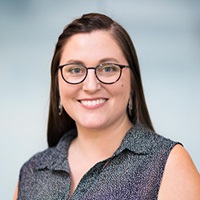 Lauren White
Some Scholars grew up participating in Native traditions; others began to explore their roots as adults. Native communities can be understandably wary of outsiders, considering the history of "helicopter research," where researchers have taken what they've needed and left.
Lauren White is currently working with Alaska Native communities and the Yakama Nation in the Pacific Northwest on mental health and suicide prevention programs. These programs take a strengths-based approach, recognizing that Native youths' ties to their parents, elders, friends, even nature, can improve their well-being and serve as protective factors.
"Even in my own community and my own Tribe, I am not an insider with everyone," she said. "NCRE Scholars are so important because we can mentor each other in how to behave as an insider and outsider, how to do that in a way that's not just getting buy-in, but also being respectful."
For many, the NCRE network extends long after any cohort ends. Former Scholars gather at the biennial Native Children's Research Exchange Conference, mentor new Scholars, and partner on studies and projects.
"At every stage, it really shaped a huge aspect of my personal and professional development," Ivanich said. "It changed my life."
To Sarche and Whitesell, seeing a small program that started over a decade ago grow into the thriving and enduring community and family it is today is among the most fulfilling parts of their own careers.
"It has been a tremendous honor and great joy to support these emerging leaders who are addressing pressing health priorities related to substance use and Native children's development in partnership with their communities," Sarche said.
Erin Duffy is the managing editor at the Buffett Early Childhood Institute at the University of Nebraska and writes about early childhood issues that affect children, families, educators, and communities. Previously, she spent more than a decade covering education stories and more for daily newspapers.