

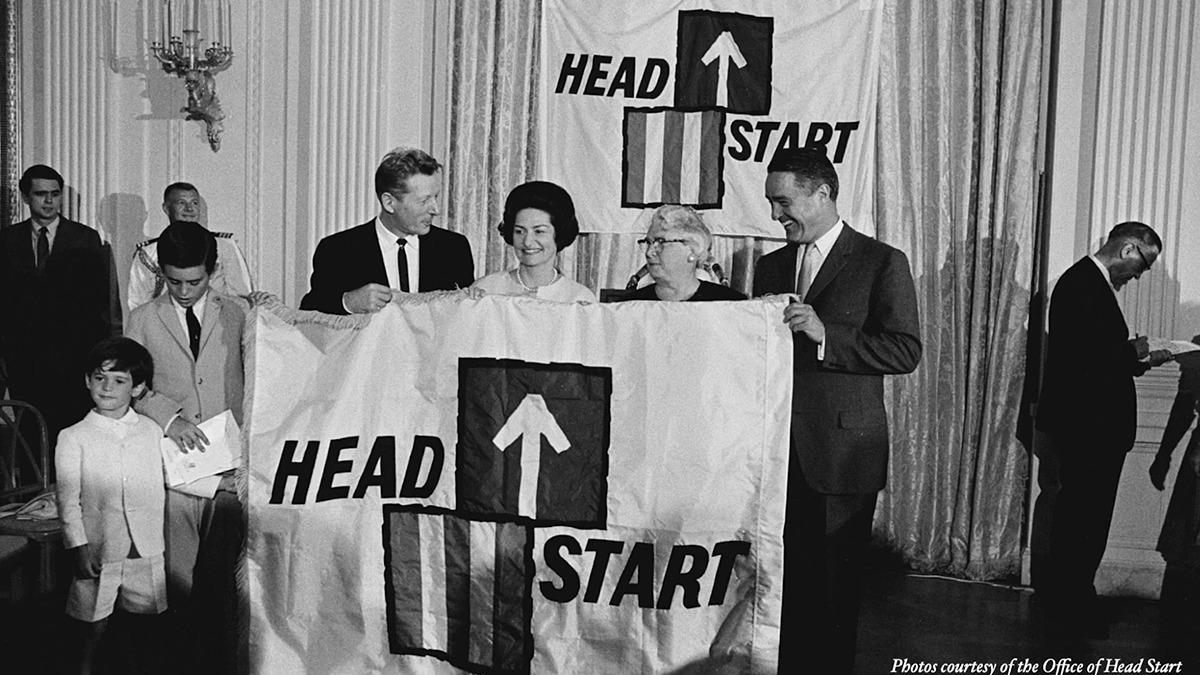
He's often called the "Father of Head Start."
Ed Zigler, a developmental psychologist at Yale University, was one of the key architects of Head Start. The landmark federal early childhood education and family engagement program was launched in 1965 as part of President Lyndon B. Johnson's War on Poverty and is celebrating its 60th anniversary this year. To date, it's served 40 million children living in poverty across the United States.
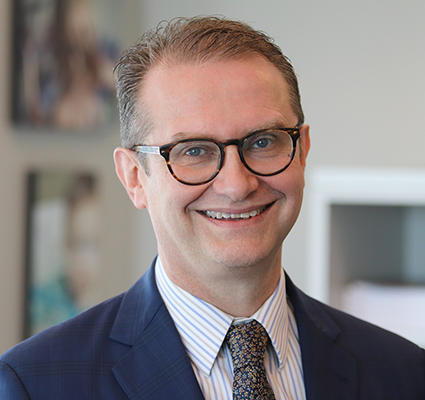
Before Zigler died in 2019 at age 88, he was the mentor, frequent research partner, and close friend of Walter Gilliam, the executive director of the Buffett Early Childhood Institute at the University of Nebraska.
Gilliam directed the Edward Zigler Center in Child Development and Social Policy at Yale University from 2005 until 2023, when he came to the Buffett Institute.
To cap off Head Start's milestone year, we talked to Gilliam about what he learned from Zigler, the lasting impact of Head Start, and how the Buffett Institute complements the wraparound approach of serving families, children, and early educators.
On how Zigler's early life influenced Head Start programming
"Ed Zigler grew up largely on the streets. He was born in 1930; his parents were immigrants. They were Polish. They came over here speaking Yiddish ... and they were quite poor.
I don't know how they would have fared if not for the fact that in Kansas City, Missouri, where his family lived, there was a settlement home. And the settlement homes back then were these programs that existed ... to help provide immigrant families and refugee families the resources they needed in order to be able to succeed in America. That might mean language services. That might mean help finding jobs, help making sure that the electricity is on, educational support services, health, mental health...
And so when Ed was later tapped to be part of Lyndon Baines Johnson's Head Start planning committee, he not only brought to that experience all of the science and child development, he also brought the experiences of a child of refugees and immigrants in the United States, and modeled an awful lot of Head Start after how this country treated its immigrant families in the 1930s."
On what made Head Start so revolutionary for its time
"The thing that truly made it revolutionary was that it focused on the parents, not as the recipients of a program, but as the actual drivers of the quality of the program. It saw ... parents as the key partners in all of this.
As Ed Zigler said many times, Head Start doesn't raise children. Parents raise children, and so Head Start really saw parents and families as the key to its success."
On how we know Head Start is successful
"There has been no other educational program in the United States that's been studied more than Head Start.
Head Start is highly effective at what it's intended to do. By the time children end Head Start, they're much more ready—cognitively, academically—for school. They tend to be healthier. They tend to be more likely to have their dental needs taken care of, they get vision screenings and hearing screenings, and their families are doing better, too...
And there's long-term data that suggests that when those kind of gains can be supported by their local schools, then those gains will sustain."
On the future of Head Start
"The needs of children, families, and communities change over time. And if Head Start is going to be responsive to children and families and communities, it too must change over time in thoughtful ways, based on the science of what we know works best for children and families."
On how the Buffett Institute works with children, families, and Head Start programs
"The Buffett Early Childhood Institute at the University of Nebraska is a university-based program. And universities, they experiment. They come up with innovative ideas.
We have (Alexandra) Daro, who's leading some work with colleagues at the University of Nebraska at Kearney and folks with the Nebraska Head Start Association to experiment with language pedometers in Head Start classrooms ... Could we make our teachers more responsive to the linguistic needs of children? That's cutting-edge research right here, designed specifically to make Head Start even better.
Through the School as Hub effort, the Institute draws from decades of Head Start practice, integrating comprehensive family supports and educator coaching into public schools and expanding the reach of birth-5 services into a birth through Grade 3 continuum."
On what he learned from Zigler
"He realized that academia is at its most beautiful when it's made available to the public, especially if you're part of a public university. We exist in the service of the public, not in the service of ourselves, and so our science needs to be made public.
Ed used to say that his favorite compliment was when he was testifying once in Congress, and a congressional leader looked at him and said, ‘Professor Zigler, you sure don't sound like a professor.'"
For more on the history of Head Start and Gilliam's recollections of Zigler, watch the full video.