

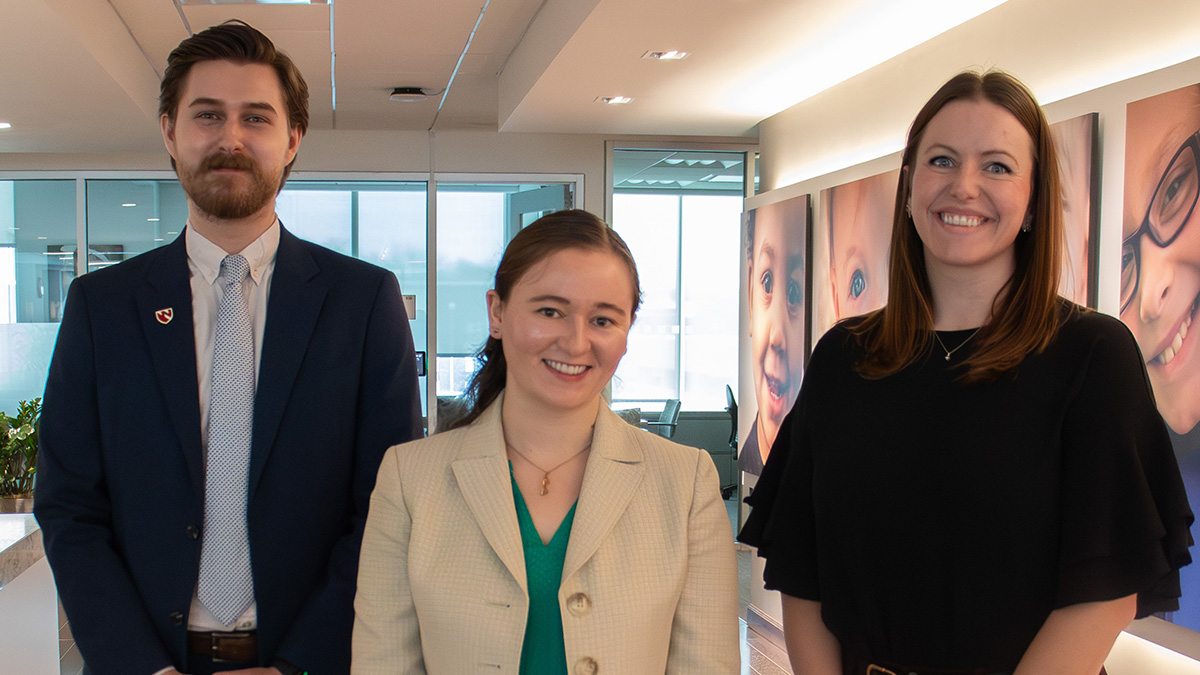
The Buffett Early Childhood Institute at the University of Nebraska has reached a milestone, launching its 10th cohort of Graduate Scholars.
Since 2016, the Buffett Institute has invested $750,000 through its Graduate Scholars program to support the early childhood-related research of Ph.D. students from University of Nebraska campuses related to early childhood education and development.
The program awards one-year fellowships worth up to $25,000 to a maximum of four NU doctoral students every year. Past Scholars have explored a wide variety of early childhood issues, including childhood allergies, the development of early math skills, microplastics in baby food and products, and depression and anxiety in mothers of premature babies.
"Each year, the research projects get more and more impressive," said Alexandra Daro, the Buffett Institute's director of applied research and program lead. "It is an honor to support these emerging scholars and gain insight into the incredible research happening across the university's campuses."
On Dec. 2, the Institute welcomed its 2025-26 Graduate Scholars and their faculty mentors from the University of Nebraska Medical Center and University of Nebraska-Lincoln. Each Scholar gave an overview of their Institute-funded research projects and fielded questions from Institute staff.
They are:
- Colman Freel, an M.D./Ph.D. student in the Department of Cellular and Integrative Physiology at UNMC. His mentors are Dr. Ann Anderson Berry and Paras Kumar Mishra.
- Rebekah Rapoza, an M.D./Ph.D. student in the Department of Pediatrics at UNMC. Her mentor is also Anderson Berry.
- Ali Shull, a Ph.D. student in the Department of Educational Psychology at UNL. Her mentor is Carrie Clark.
Freel's research focuses on health outcomes related to pregnancy, specifically for pregnant women with diabetes whose children have higher rates of cardiovascular diseases, including hypertension, even later in life.
He is studying a specific cellular process, endothelial to mesenchymal transition (EndMT), and whether cell damage during that process can also be mitigated by omega-3 fatty acids.
Rapoza's research centers on how maternal stressors during pregnancy, like food insecurity or poverty, can impact babies' health in the short- and long-term. These maternal stressors can increase the immediate risk of premature birth, low birth weight, and infant mortality, as well as the lifelong risks of conditions like Type 2 diabetes and cardiovascular diseases.
The biological reasons behind these risks are still being studied, and Rapoza will explore whether placental gene regulation and expression of key metabolism genes, notably those impacting the omega-3 nutrients, could contribute.
Shull is researching how exposure to parenting content on social media platforms like TikTok and Instagram affects parental stress and confidence. She's recruited parents to watch popular parenting videos while wearing heart rate monitors.
She'll measure their biological response to those videos compared to arts and crafts content, and will survey how they perceive their own parenting skills and whether they compare themselves negatively to parenting influencers.
The results of these ambitious projects will be shared at a symposium in the spring.
This program stands as another example of the Buffett Institute's longstanding commitment to supporting graduate students and faculty mentors across the University of Nebraska's campuses.
These graduate-level students further the university's research priorities, while the Institute offers them critical project funding and the opportunity to network with and learn from experts across the early childhood field.
Erin Duffy is the managing editor at the Buffett Early Childhood Institute at the University of Nebraska and writes about early childhood issues that affect children, families, educators, and communities. Previously, she spent more than a decade covering education stories and more for daily newspapers.