November 4, 2026
When it comes to America's child care system, the math doesn't work.
There are too many children and not enough spots. Parents pay thousands of dollars each year—often the monthly equivalent of a second rent or mortgage payment—and yet child care providers nationally make $14-$15 per hour.
There are huge, systemic issues at play—wages for child care workers that can’t compete with sectors like fast food and retail, rising costs of food and insurance for programs, staff recruitment and retention, and more.
But at the heart of it was a simple math problem Allyx Schiavone couldn't solve: She wanted to raise her teachers' pay but knew her parents couldn't afford the accompanying tuition increase.
So Schiavone, the CEO of the Friends Center for Children, a New Haven, Conn. child care program that started in the basement of a Quaker meetinghouse and has grown to four state-of-the-art centers, decided to study the problem from another angle.
What if the center could provide a different kind of benefit to its educators: free housing?
First, more math. In Connecticut, the average early educator salary is $34,600. The annual cost of rent is $22,800. It didn't take an economics whizz to understand housing costs were a huge source of stress for many Friends Centers' teachers.
“They’re unable to have their basic needs met. That’s a screaming red flag," Schiavone said in a video.
In 2019, the Friends Center began planning what would become its rent-free First Home, First Teacher initiative, an attempt to solve one piece of the early childhood workforce recruitment and retention crisis.
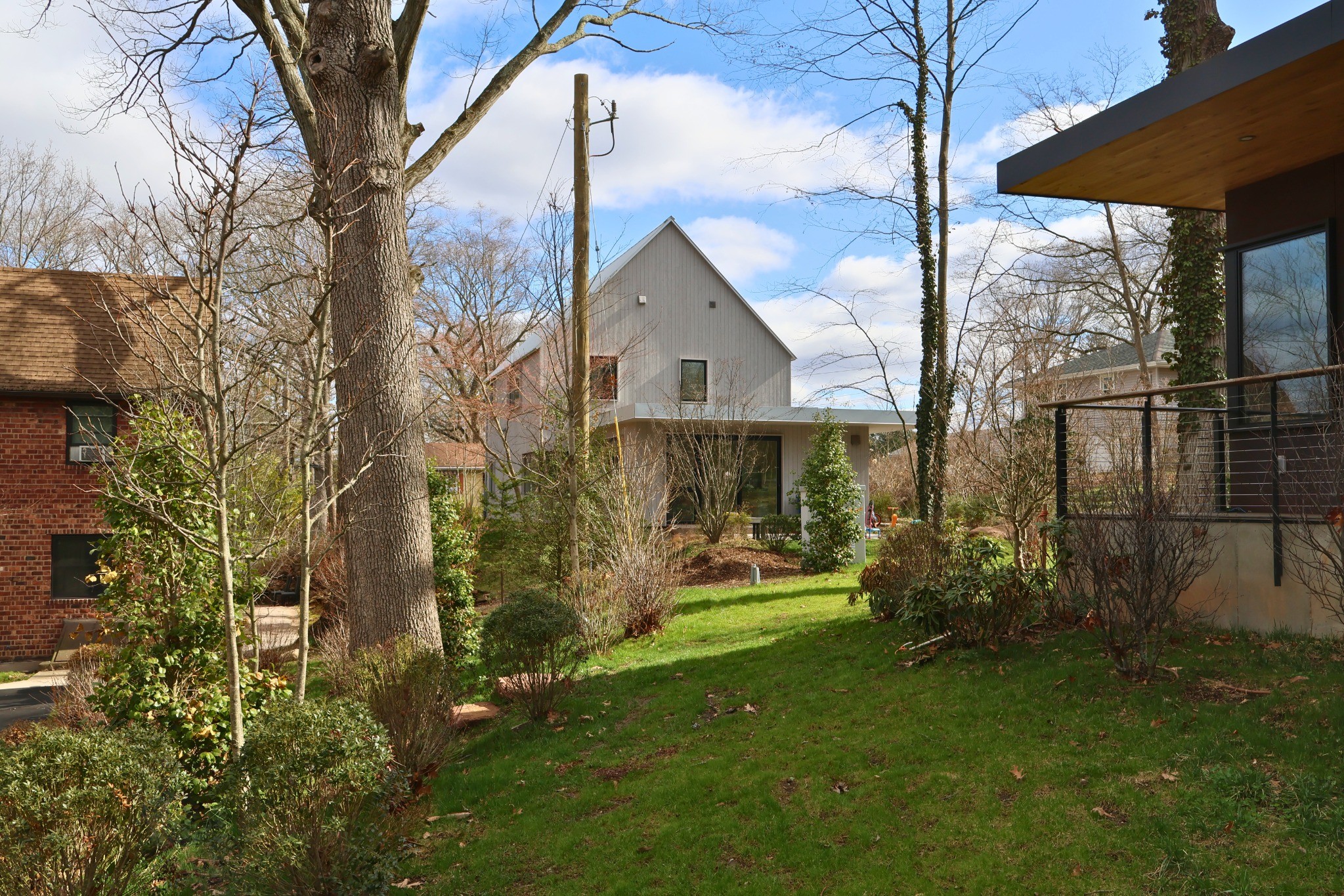
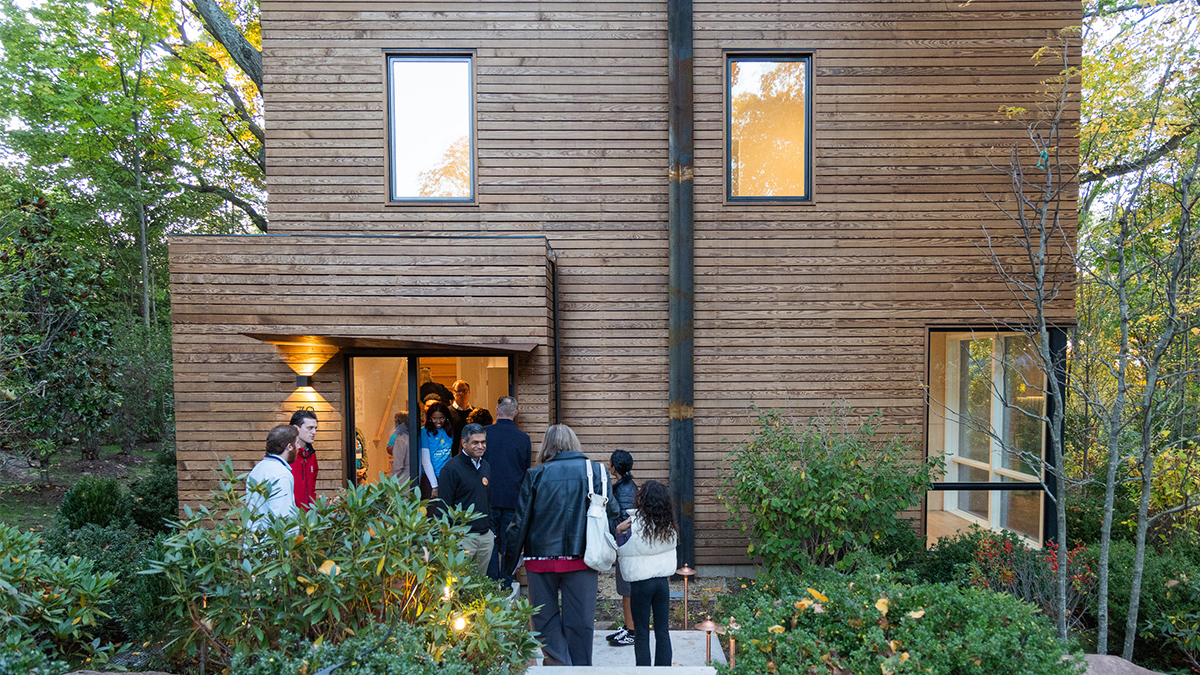
Six years later, on Oct. 15, the Center officially opened the nation's first rent-free teacher housing village in New Haven's leafy Fair Haven Heights neighborhood. A cluster of five single- and multi-family homes, the newest sleekly designed by the nearby Yale School of Architecture, offer early educators stability while demonstrating how communities can invest in their caregivers.
"Rent-free housing gives educators room to breathe, to continue their education, to reduce debt, and imagine what's next," Schiavone said.
That same day, funders, government officials, and early childhood leaders gathered for the First Home, First Teacher convening to learn from, and potentially replicate, the Friends Center model.
Among the speakers was Walter Gilliam, executive director of the Buffett Early Childhood Institute at the University of Nebraska, who has extensively researched early childhood workforce well-being. A former Yale professor, Gilliam returned to New Haven to share data and explain why supporting the adults who care for young children is essential to children's healthy development.
For Gilliam, the housing initiative illustrates a principle that has guided much of his work: For children to be well, the people who care for them need to be well, too.
The convening represented the next evolution for the First Home, First teacher movement. What began as an effort to support local educators has attracted interest from communities across the country grappling with the same workforce challenges.
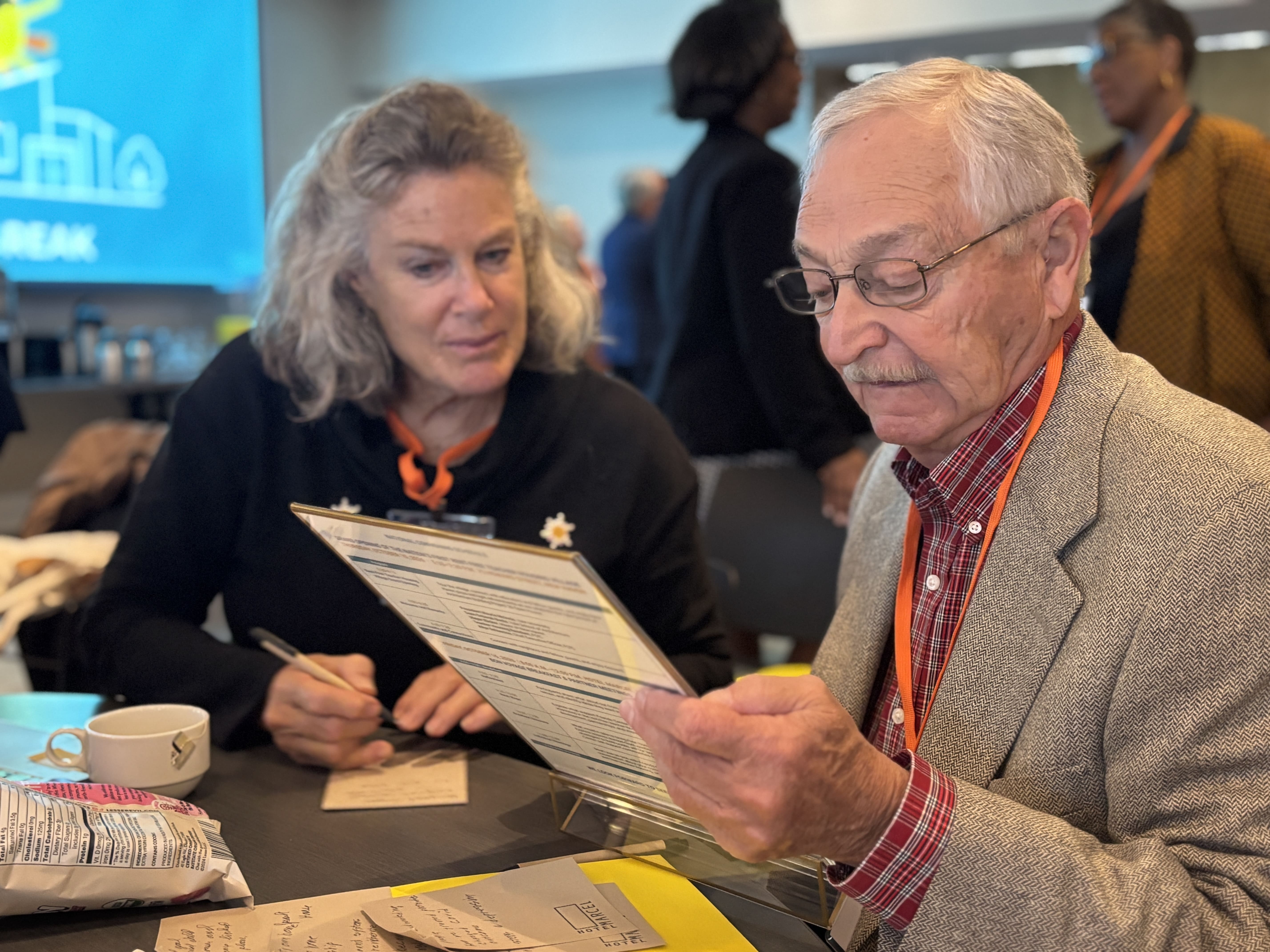
At the convening, more than 130 attendees from North Carolina, New York City, California, and more dug into the financial details, heard directly from teachers who have benefited from employer-provided housing, and toured the housing village while snacking on slices of famed New Haven pizza.
Attendee Ken Snyder, a retired rancher from Nebraska, has become a dogged advocate for expanding child care in his rural county, population 8,000.
“As a cowboy I was kicked in the stomach,” he told the convening. “I broke my collarbone. I had several debilitating concussions, but nothing makes my head swim more than trying to figure out how to make child care available to single mothers in Keith County, Nebraska.”
Could the Friends Center's approach offer a blueprint for communities like his?
An Innovative Approach for Supporting Teachers
The project began when local philanthropists donated two properties worth a combined $750,000.
Since 2021, that real estate portfolio has grown to nine houses with 16 units, a mix of new builds and renovations of differing sizes.
Thirty-seven residents, a mix of Friends Center educators and their families, have received rent-free housing based on financial need and their current housing situation.
The Friends Center owns the homes, pays property taxes, and provides maintenance, but this is a true community partnership. The newest residence was designed and built by Yale architectural students. Several properties have been donated; others have been purchased by the child care center, with $250,000 of public money used.
Teachers sign leases, pay utilities, and work with a financial coach on budgeting, paying down debt, and establishing long-term goals, such as saving up for a down payment on a home.
The goal is to acquire 24 units by 2028. The upfront costs are not insignificant—multi-unit homes can cost upwards of $400,000.
But the Friends Center estimates that the housing benefit equates to a $22,700 salary benefit for teachers, while ultimately saving the organization money in the long-term by reducing turnover costs and building a physical endowment. The real estate holdings are expected to generate an 11.6% annual cash return as property values rise.
'It's a Sense of Relief'
Before he began living at a Friends Center property nearly two years ago, infant-toddler head teacher Eric Gil shared a room with his cousin and brother and commuted 50 minutes each way to work. He had little time to plan his lessons or prepare for the next day.
"The children will know when you're having a bad day or are struggling," he said, speaking on a teacher panel at the convening. "They would say, 'Are you OK, Eric?'"
 Friends Center teachers share their experiences
Preschool assistant teacher Paris Pierce is a mother of three. Rent for her previous apartment nearly consumed her paychecks. Homeownership felt out of reach.
Still, she was wary of the housing initiative: Was it really a good idea for her employer to be her landlord, too?
Friends Center staff encouraged her to think it over. She applied and has been living in a rent-free unit with her children for nearly six years.
"It’s a sense of relief that we have that safety net, that security, less worries," Pierce said. “It's a normal apartment. They don't bother us."
Living arrangements vary. Some teacher-residents live in standalone units with children and partners, others in houses with shared common areas.
The housing is intended to act as a bridge to homeownership and financial stability, but there is no strict deadline for how long a teacher can stay. If a teacher leaves their job, they're not evicted immediately: they can finish their lease and start paying market-rate rent.
With housing costs eased, 77% of teacher-residents have gone back to school to pursue or finish a degree, allowing them to earn higher salaries and making it more likely they'll stay in the field.
"Financial well-being and emotional well-being are tied together," said preschool teacher Carina Figueroa, who's lived in a Friends Center unit for two months. "When you invest in your educators, you're also investing in your students, the parents ... They know their teachers have a mind that is at peace."
Why Housing Matters for Workforce Well-Being
Early educators play a hugely important role caring for and teaching young children precisely when their brains are growing the most, and yet they are underpaid, undervalued, and prone to high levels of stress and depression, Gilliam said in his remarks.
Buffett Institute data shows that as many as 4.2 million children nationwide lack access to child care.
"Why do we have a child care gap?" Gilliam said. "It's not just facilities and a lack of square feet. It's a lack of human feet and staffing. The real lack is we don't pay enough."
 Walter Gilliam speaking at the convening
Fellow speaker Mindy Gold is the director of the Capitol Child Development Center in Hartford, Conn. Her center surveyed teachers to ask what they would do with more money.
The top answers? Pay down debt and stop delaying dental care.
Adult stress trickles down to children. When adult caregivers are healthy, happy, and supported, they can fully cultivate the warm, trusting relationships that children need for a strong start in life and school.
"A child’s cup is filled to the degree that a child care provider's cup is overflowing," Gilliam said. "And we have not been overflowing our child care providers' cups like we ought to."
Recreating the Rent-Free Model
Communities in Georgia, Missouri, Michigan, and more are tailoring the Friends Center model to fit their needs.
"We’re now scaling this work," Schiavone said. "What began as a local solution is really spreading."
Maria Ortiz Borden and Kathy Szenda Wilson, the co-executive directors of Pulse, an early childhood initiative in Michigan, cold-called the Friends Center after seeing a CBS News segment about the housing approach.
"I call it 'borrowing brilliance,' not stealing," Ortiz Borden said. "We still want larger wages for this profession. We also want benefits. We want 401K plans. We’ll keep pushing for those, but people, we're all in on this housing program."
In an upcoming blog, we'll share how other communities are exploring this model, as well as key takeaways for local leaders who want to get started.
Erin Duffy is the managing editor at the Buffett Early Childhood Institute at the University of Nebraska and writes about early childhood issues that affect children, families, educators, and communities. Previously, she spent more than a decade covering education stories and more for daily newspapers.
First Home, First Teacher Photo Gallery