October 30, 2026
The latest cohort of Buffett Early Childhood Institute Graduate Scholars is studying real-world issues that impact families, early educators, and the economy.
The Buffett Institute has invested more than $800,000 through the Graduate Scholars program, now in its 11th year, to fund ambitious research projects by doctoral students from University of Nebraska campuses.
The program awards one-year fellowships worth up to $25,000 to a maximum of four NU doctoral students every year. Past Scholars have explored a wide variety of early childhood issues, including childhood allergies, the development of early math skills, microplastics in baby food and products, and the effect of social media on parents.
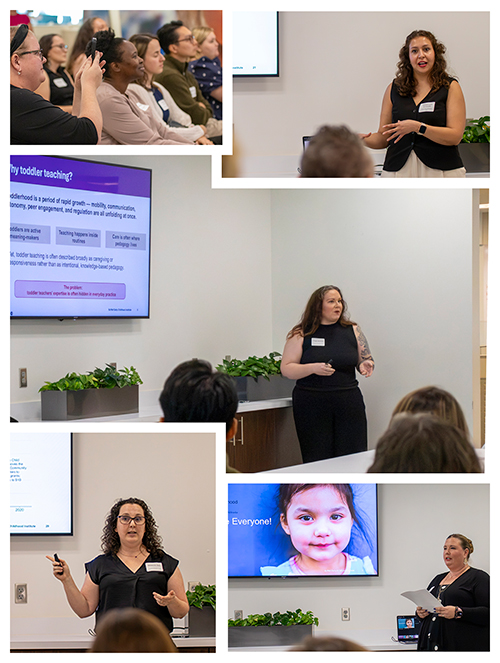
On Oct. 12, the 2026–27 Scholars, their faculty mentors, and friends gathered at the Buffett Institute to share their research projects, answer questions, and connect with Institute staff.
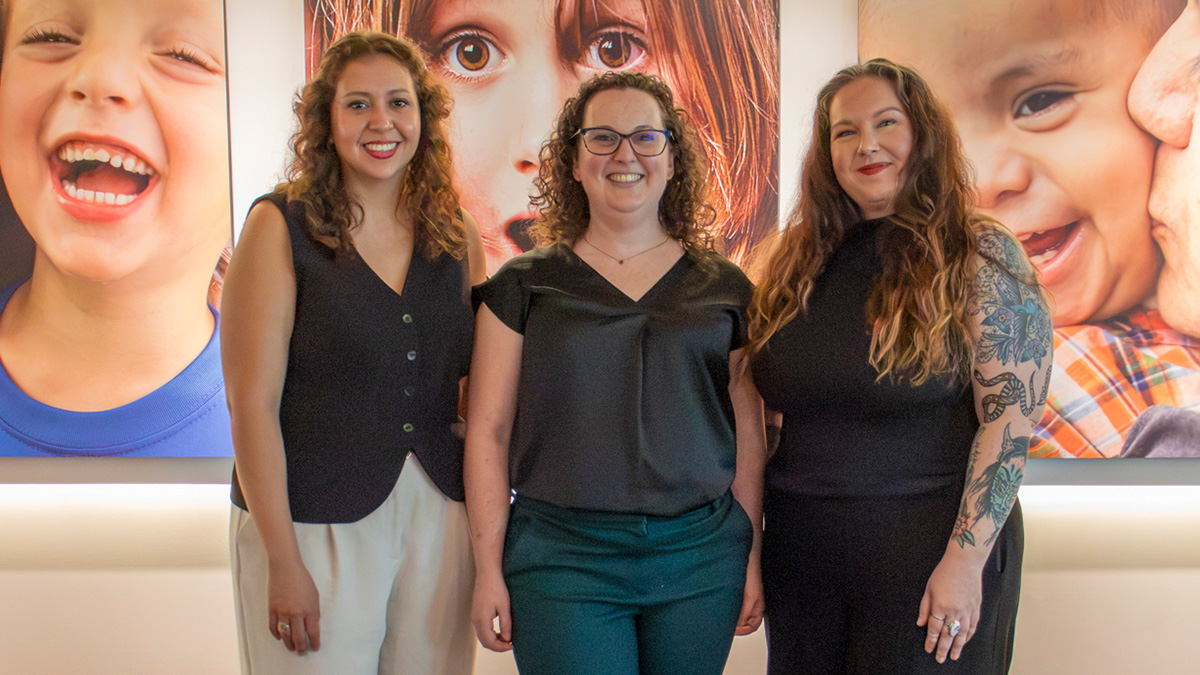
The Scholars are:
- Marisol Loza Hernandez, a Ph.D. candidate at the Integrated Center for Autism Spectrum Disorders at the Munroe-Meyer Institute at the University of Nebraska Medical Center. Her faculty mentor is Mary Halbur.
- Rebecca Jack, a Ph.D. candidate in the Department of Economics at the University of Nebraska–Lincoln. Her faculty mentor is Brenden Timpe.
- Paige Wernick, a Ph.D. candidate in the Department of Child, Youth and Family Studies at the University of Nebraska–Lincoln. Her faculty mentor is Amy Napoli.
“Our goal with the Graduate Scholars program is to champion doctoral students from across the university system," said Alexandra Daro, the Buffett Institute's director of applied research. “Each year the research projects continue to be more and more impressive. The quality of research that gets submitted to us is top notch.”
Loza Hernandez's project focuses on establishing and evaluating group training for Spanish-speaking caregivers working with young children with autism on everyday living skills, such as handwashing or putting on their shoes.
Applied Behavior Analysis (ABA) therapy is the gold standard for children with autism, but programs can be costly or some with long waiting lists, she said. And language barriers persist for parents and families who speak a language other than English.
Early independence is crucial for young children, who may otherwise rely heavily on their caregivers to navigate the world and perform skills. That can leave people with autism heavily reliant on their caregivers and shut out of employment and other social activities.
"Early intervention and caregiver involvement is important," Loza Hernandez said. "If we can equip caregivers to systematically teach their kiddos to be more independent, we’re helping the children become more independent."
She is currently recruiting families for her study, which will involve establishing a group training program and evaluating its effectiveness and whether families consider it linguistically and culturally appropriate.
Jack is studying how access to after-school programs affects mothers’ ability to work, including their employment, earnings, and access to benefits.
Just over half of all school-age children rely on non-parental care during the week, Jack said. That could include care provided by nannies, babysitters, neighbors, or more formal after-school or child care programs.
Considering the typical workday is longer than the school day, "this is a huge market," she said.
Many of those who provide this care are mothers themselves. Federal funding for after-school programs has increased dramatically over the past two decades, and access to after-school care can help mothers re-enter or stay in the workforce.
But there's a delicate economic balance: While expanding access to after-school programs can create more employment opportunities for mothers who rely on child care, it can also unintentionally disrupt the livelihoods of women who earn income by providing informal care.
Jack is collecting data on federal 21st Century Community Learning Centers grants for after-school programs in different states and looking at the impact on maternal employment, which could inform policy considerations for after-school care access and working mothers.
Wernick is researching how toddler teachers make in-the-moment decisions during classroom interactions, a process known as pedagogical reasoning, and how their knowledge and experiences guide those decisions.
Toddler teachers’ training and expertise is often hidden in the everyday routines they engage in, such as play, mealtime, or changing diapers, Wernick said. But when a toddler reaches for another child's cup, a teacher must decide how to respond within seconds: does she redirect the child or grab the cup herself?
“There is expertise happening in the classroom, but we often don't have a way to name this or label what we’re seeing," Wernick said.
For her study, she'll observe interview educators, observe classrooms, and watch clips with teachers and ask them to explain their decision-making.
It's important for policymakers and the general public to understand and recognize the skills and expertise of the often underpaid and undervalued early childhood workforce, she said.
Buffett Institute staff and university faculty will gather again in the spring for a symposium where Scholars will share their research results.
Erin Duffy is the managing editor at the Buffett Early Childhood Institute at the University of Nebraska and writes about early childhood issues that affect children, families, educators, and communities. Previously, she spent more than a decade covering education stories and more for daily newspapers.