

October 23, 2026
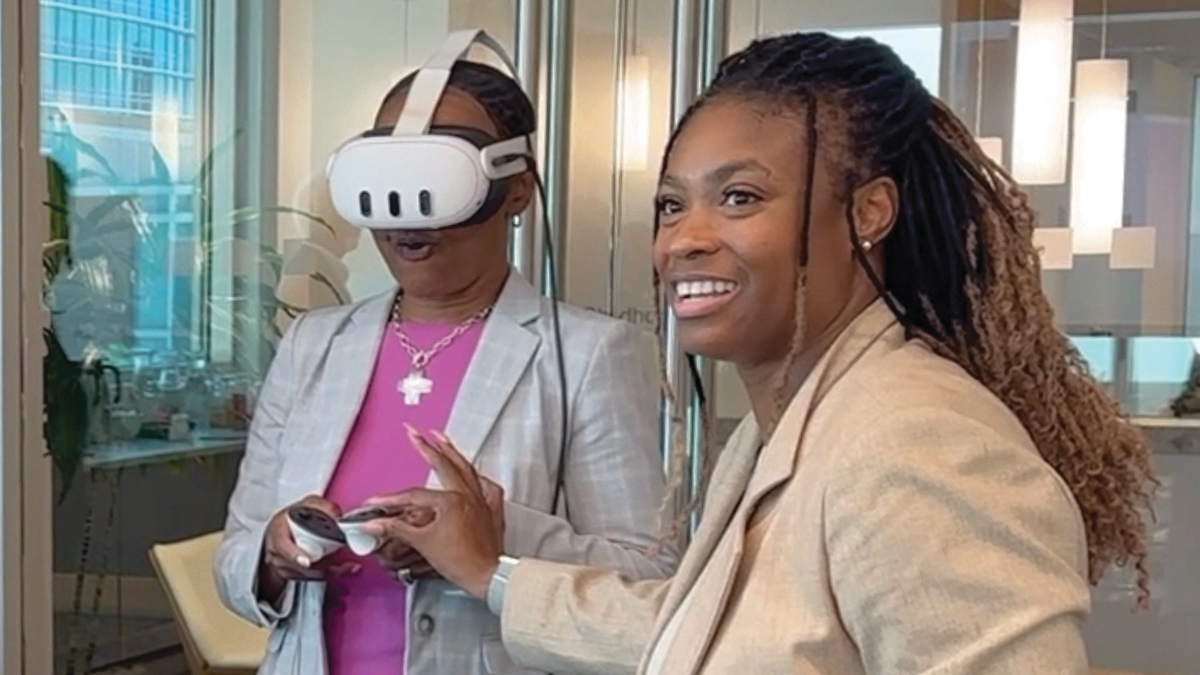
New technology is transforming every aspect of our lives—and education is no exception, impacting the way we teach, learn, and connect.
The Nebraska VR Network for Education & Research (NeVRNER) is embracing this head on, serving as a platform for NU faculty and staff to gather and discuss how to use technology to advance medical education and research and help students or trainees maximize their learning experience.
And as the director of digital education at the Buffett Early Childhood Institute at the University of Nebraska, I'm making sure early childhood perspectives are included in NeVRNER.
NeVRNER's strength lies in connecting expertise across University of Nebraska campuses, disciplines, and community organizations. The network brings together educators, researchers, technology experts, and community partners to explore the possibilities of virtual reality (VR), simulations, and other emerging technologies.
These partnerships create opportunities to share ideas, advance research, and explore innovative approaches to real-world challenges.
In my role, I have an opportunity to consider how emerging technologies can support young children, families, and educators—and how we can learn from innovations happening in other fields.
This year's NeVRNER Annual Meeting was held on Oct. 8, and I had the opportunity to listen and learn from others but also share more about our work.
My five takeaways:
-
- Immersive technology is creating new possibilities for teaching and learning. Presentations highlighted how virtual reality (VR), augmented reality (AR), and other immersive technologies are being used in education and medicine to create learning experiences that would be difficult or impossible to recreate in traditional settings.
- Some things are better experienced than explained. One of the most memorable demonstrations allowed us to virtually explore the inside of a human skull. Experiences like this illustrate how immersive technology can make complex concepts more tangible, interactive, and accessible to learners.
- Holographic technology is changing how people connect across distances. We saw demonstrations of holograms being used to communicate with people across state lines, creating a sense of presence that goes beyond traditional video conferencing. This raises interesting possibilities for connecting educators, coaches, researchers, and families regardless of geographic location.
- Early childhood education has an opportunity to learn from innovation in other fields. While many presentations focused on education and medicine, the applications sparked important questions about how similar technologies might support early childhood professionals. From practicing challenging interactions to experiencing classroom scenarios in immersive environments, there is an opportunity to rethink how educators learn and strengthen their practice.
- The Buffett Institute is contributing to the conversation about what's next. Our presentation of the Reality Coach tool demonstrated how AI-supported simulations can provide educators with opportunities to practice, reflect, and refine their interactions. As immersive technologies continue to evolve, our work explores how these tools can support professional learning while keeping human relationships at the center.
I left the meeting inspired by the ideas, conversations, and possibilities for collaboration—and excited about what these innovations could mean for the future of education.
Dalhia Lloyd is the director of digital education at the Buffett Early Childhood Institute. In her role, she leads forward-thinking initiatives that blend applied research, emerging technology, and community partnerships to improve early learning, support families, and strengthen educator practice.