

September 15, 2026
Imagine being 5 years old and, before your first day of Kindergarten, receiving a personalized message from your new teacher welcoming you by name. You get a glimpse of your classroom, hear what to expect, and begin to picture what Kindergarten might feel like.
At the Buffett Early Childhood Institute, our Digital Learning team asked a simple question: Could technology, including AI, help create a more welcoming Kindergarten transition for children and families? That question led to a partnership with Nelson Mandela Elementary in Omaha to explore a more personal approach before the first day of school.
From the beginning, we knew that a more personal experience couldn’t start with technology. It had to start with the people who understand children, families, and classrooms best. Before we thought about what AI could do, we listened to the educator who would ultimately welcome new scholars into her classroom.
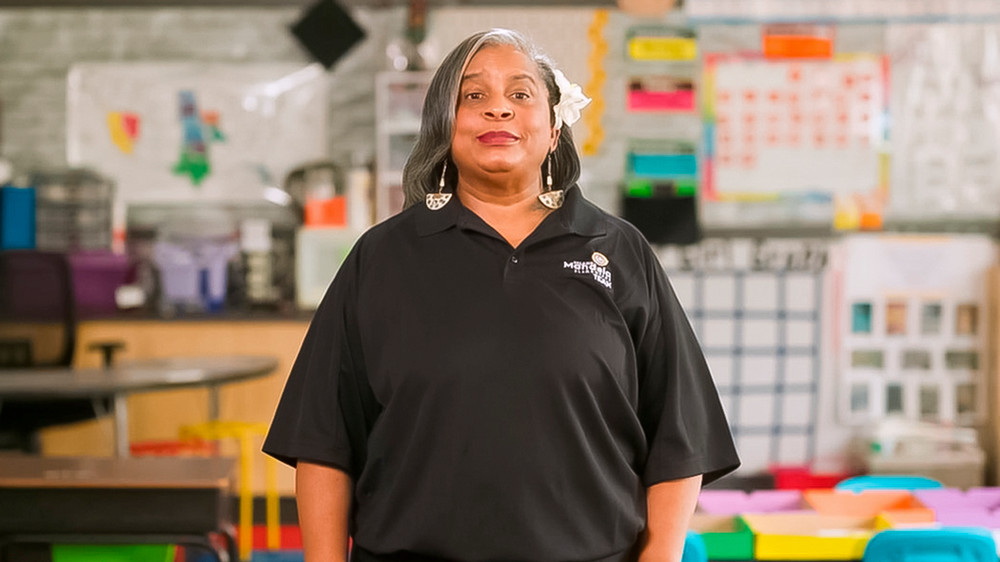
Diann Moore, one of Nelson Mandela’s Kindergarten teachers, helped shape every part of the experience. Her voice and expertise guided the messages children would receive because she knows her classroom, her community, and how she wants to welcome children and families into it. AI helped us create something new, but it didn’t decide what the experience should be. Moore did.
That distinction matters. If AI is going to have a place in education, educators and families should have a voice in shaping how it is used. That same principle guides our partnerships with Boys Town and the work we are doing together to center the voices of early childhood professionals while designing AI tools that support their practice.
Turning One Welcome into Something Personal
Moore started with something simple. She recorded a video speaking about her favorite vacation spot and a voice memo of each child’s name. From there, the Buffett Institute and Boys Town worked together to explore how AI could take that and turn it into a personal welcome video for every child without asking Moore to record a separate video a dozen times.
The collaboration brought together different kinds of expertise. Moore brought her knowledge of teaching, her classroom, and her school community. The Institute brought its expertise in early childhood development and school transitions, along with the vision for exploring how emerging technologies might support children, families, and educators. Boys Town brought the AI engineering expertise that made the personalization possible.
Since an AI “avatar” of Moore exists now, as the school year continues, she can continue to send out more videos without having to re-record. Each can be personalized to the interests of her individual students. And Moore is already thinking about where that kind of personalization might lead next.
“My parents really enjoyed the personalization video," she said. “As the year advances, my hopes are that the AI avatar will respond to questions from parents with the same personalization in its response.”
Using Technology to Connect with Families
Each family received a personalized video via the school communication platform of Moore introducing herself and welcoming their child by name.
The response from families came almost immediately. Parents reached out on their own to share what was happening as they watched the video with their child.
"I love it!! She's excited to see you soon."
"He is giving you big smiles and is very excited."
"We are readddyyy. Thank you for this video."
And while the videos were created for children, we noticed something else was happening. Parents were responding, sharing their children's excitement, and connecting with Moore before the first day of school. What started as a personalized video for one child became an invitation for connection with the whole family.
Beyond the First Day of Kindergarten
The strength of this approach is that it doesn't create more work for teachers. Once the initial content has been created, the same model could make it easier for teachers to personalize future communication with families without recording an entirely new message —creating new opportunities for family engagement throughout the school year.
The technology creates possibilities, but educators still determine when a message is useful, what it should say, and how it fits within the relationships they are building with children and families.
This small pilot demonstrates what is possible when innovation begins with relationships. It gives us an opportunity to explore a much bigger idea. What becomes possible when emerging technology is designed around the experiences we want children and families to have?
AI is simply the tool. The real innovation is helping every child feel welcomed, every family feel connected, and every teacher strengthen relationships in meaningful ways.
If you'd like to learn more about this project or explore how personalized AI tools might support transitions in your school or community, reach out to Buffett Institute Director of Digital Education Dalhia Lloyd.
Keshia Partridge-Nelson is an early childhood specialist at the Buffett Institute. In her role, she supports the development of innovative initiatives that integrate emerging technology, professional learning, storytelling, and community partnerships to advance early learning.
Dalhia Lloyd is the director of digital education at the Buffett Institute. In her role, she leads forward-thinking initiatives that blend applied research, emerging technology, and community partnerships to improve early learning, support families, and strengthen educator practice.