

September 4, 2026
At the University of Nebraska at Omaha (UNO), early educators like Myth Webster are combining theory and practice by studying for their degree while working full-time.
The Early Childhood Inclusive Professional (ECI PRO) Pathway is designed for early educators who are already working in the field and want to earn a bachelor's degree along with a Nebraska early childhood teaching certification, which covers birth through Grade 3.
The program's classes are highly flexible and accessible, with a cohort model designed to provide extra support to students who are balancing work, life, and school. Students can earn most of their needed practicum hours at the sites where they already teach.
For example, Webster is currently an associate teacher at Educare of Omaha at Indian Hill in South Omaha. Just 19, she's already been working as an early educator for more than two years—by the time she graduated high school, she had earned an associate degree from Metropolitan Community College through its dual-enrollment program.
"I really just believe my bachelor's is the stepping stone to everything else I want to achieve," she said. "And getting it as soon as possible is my ultimate goal. The ECI (PRO program) made it achievable for me, without waiting."
And there's no waiting to apply what she's learning in her courses—she gets hands-on experience every time she clocks into work as a teacher.
"That has been the biggest thing for me, to use my experience and get active feedback while going to school in the evenings," Webster said.
Tiffani Holmes is the early childhood inclusive director in the College of Education, Health, and Human Sciences at UNO and coordinates the ECI PRO program. Helping early educators attain their education degree, teaching certification and plan their long-term career goals feels like a full-circle moment: she started as an infant-toddler teacher at Educare of Omaha (Skinner) and is proud to provide career support and mentorship to a new generation of early educators.
"I've created mentorship to support them through this journey," she said. "They're balancing a lot—working full-time, going back to school, getting good grades, being present for their families and kids."
The ECI PRO program takes roughly two years to complete, and participants must have an associate degree or a similar number of college credits, such as from Metropolitan Community College, a key partner on the program.
The program's first cohort, with nine participants, is halfway through, and a second group has already started. Privately funded scholarships are available, and Educare is one of the leading partners that allows cohort members to fulfill their practicum hours while working.
"It's a way for working professionals to continue to build their confidence in this field, in a field that's not as valued," Holmes said. "It's really acknowledging the work that they're already doing."
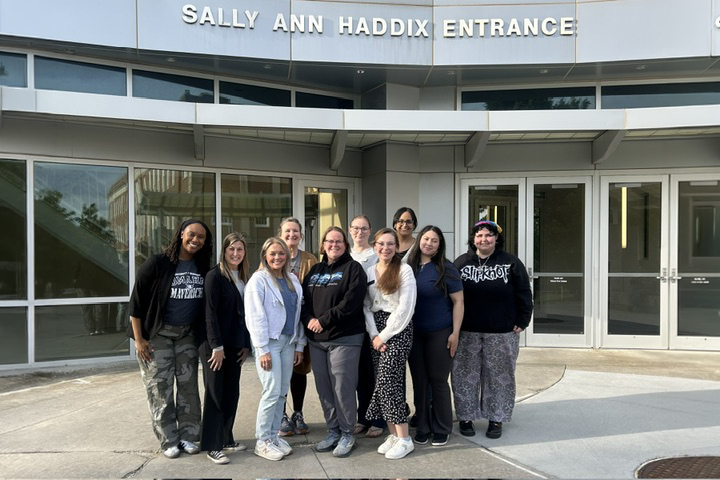
 The second ECI PRO Pathway cohort works on a play activity.
Stabilizing and strengthening the early childhood workforce is a critical need.
Young children thrive under the care of familiar, trusted, and high-quality educators. Yet, child care shortages persist across the country, and early educators leave the field frequently, often due to low wages and a lack of benefits.
A recent report from the Buffett Early Childhood Institute at the University of Nebraska studied workforce registries in eight states and found that 44% of child care staff had left between 2023 and 2025.
Nebraska, like many states, does not require a bachelor's degree or teaching certificate for most licensed child care providers. They do need to pass a background check, complete certain safety training programs, and maintain 12 hours of training each year.
While early childhood degrees are not for everyone and have a high barrier to entry, namely the cost and time, ensuring our youngest learners have qualified and trained teachers and caregivers is a growing area of interest in research, policy, and community development.
Educators who earn credentials like the Child Development Associate credential or a four-year degree are more likely to stay in the field and advance their careers, the same report found. The result is a win-win: higher wages and job security for educators, and more stability for the young children, families, and programs who depend on them staying in the field.
In her role, Holmes is as much a mentor as a program administrator, helping early educators build their confidence and leadership skills. She challenges them to map their career goals, whether it's staying in the classroom, moving into administrative or leadership roles, or earning an advanced degree.
"What is the next step? What are your goals?" Holmes said. "A lot of these teachers aren't feeling seen. They're not feeling valued. And what how can we do that to support them?"
Holmes credits the late UNO Professor and Buffett Institute Community Chair Debora Wisneski, who died of cancer in June, for always supporting her career and academic goals. Holmes is currently in the process of applying for the Doctor of Educational Leadership program herself.
"When I was a teacher, when I had people pour into me, like Deb or other mentors I've had around, it helped me get through those hard times we go through as teachers," she said.
Webster ultimately wants to earn her master's degree in either elementary education or educational leadership. She loves helping young children learn and grow, but she wants to build up her fellow teachers, too.
"I want to continue to be that person who can provide guidance not just for the kids, but the adults around me," she said.
Erin Duffy is the managing editor at the Buffett Early Childhood Institute at the University of Nebraska and writes about early childhood issues that affect children, families, educators, and communities. Previously, she spent more than a decade covering education stories and more for daily newspapers.