July 24, 2026
As a U.S. Space Force military spouse, Sabrina Dalton knows what it’s like to piece together child care for her three kids.
For years, she moved in and out of the workforce depending on child care availability as the military relocated her family to different states—they’re currently on their sixth move.
“We just couldn’t make the numbers work,” said Dalton, now the chief operating officer for Operation Child Care Project. “I thought about going back to work numerous times, and the calculus never worked.”
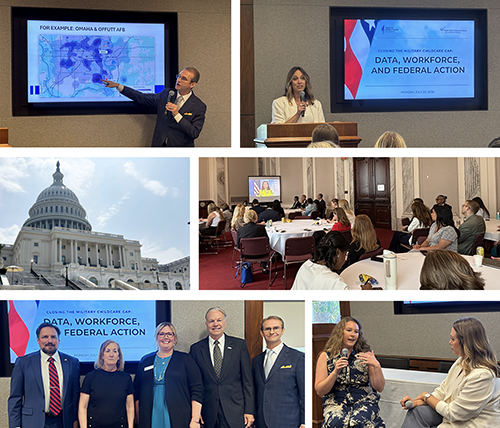
Dalton shared her family’s story—an all-too-common one—at the “Closing the Military Child Care Gap: Data, Workforce, and Federal Action” congressional briefings hosted by the Buffett Early Childhood Institute and the National Military Family Association (NMFA) on July 20 in Washington, D.C.
More than 100 congressional staffers and representatives from military and early childhood organizations attended the briefings for the U.S. House of Representatives and U.S. Senate, which were sponsored by the offices of U.S. Sen. Deb Fischer and Congressman Don Bacon. Fischer also provided video remarks.
Families everywhere—civilian and military—struggle to find quality, affordable child care. And while child care shortages cause ripple effects for all employers, there are additional national security and readiness concerns for the military.
“If a service member can't find child care and has to miss work, that puts the readiness of the entire unit at risk,” said NMFA CEO Besa Pinchotti.
Buffett Institute Executive Director Walter Gilliam shared new data on child care gaps around military installations nationwide, as well as research on child care provider retention, military family well-being, and the effects of military life on young children’s behavior and mental health.
Forty-one percent of military men and 59% of military women consider child care a necessity to work, and one-quarter of military women cite child care shortages as a reason they might leave the military.
“Many Americans, including our service personnel, need two things in order to be able to get to work: they need a road to drive on and somebody to watch the children,” Gilliam said. “That's the infrastructure that they need in order to be able to get to work.”
The Buffett Institute has been mapping child care gaps across the United States, including around military installations. In the Omaha metro area, for example, one of the highest concentrations of need is around Offutt Air Force Base.
Due to waitlists for on-base child development centers, more military families seek child care off-base at community programs, but those providers tend to have fewer resources, including lower pay and limited benefits.
Off-base providers also report more concerning behaviors in children—including tantrums, becoming more withdrawn, and physical symptoms like unexplainable stomachaches.
Gilliam suggested solutions like retention bonuses for child care providers, providing free child care for child care employees, following the Kentucky employee subsidy model, and increased access to behavioral services for children in off-base child care programs.
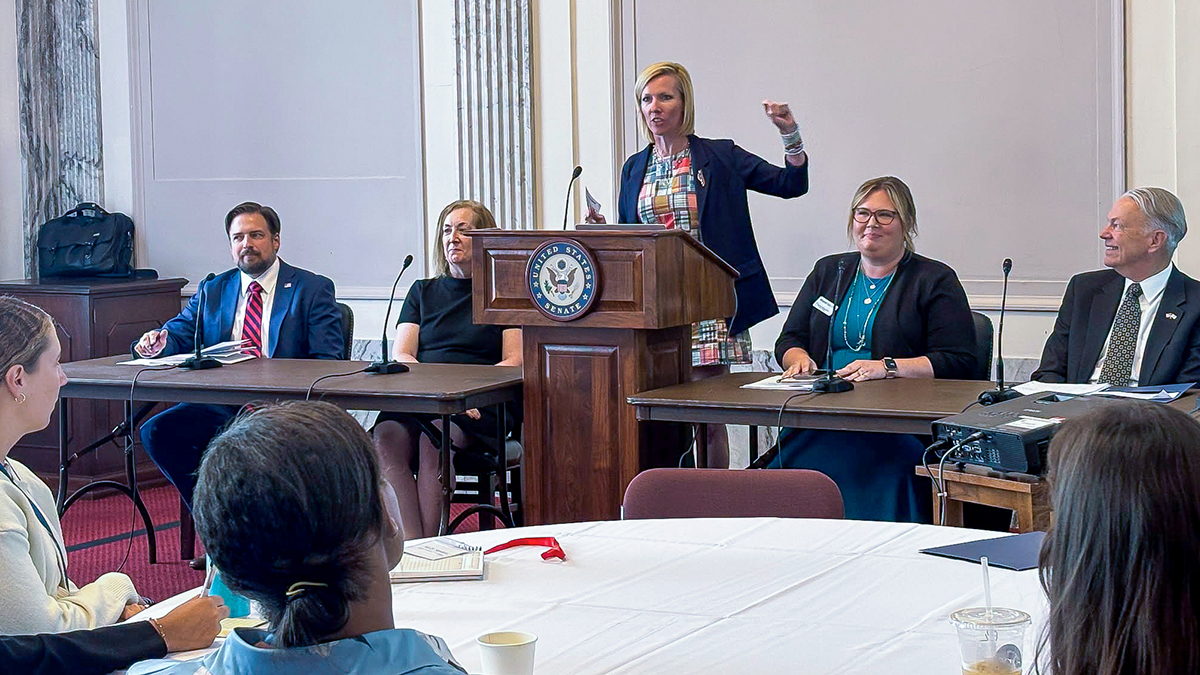
More practical and policy solutions came from an expert panel moderated by Raleigh Smith Duttweiler, chief impact officer at NMFA. Panelists included:
- Stephen Simmons, Deputy Assistant Secretary of War for Military Community and Family Policy, U.S. Department of War
- William French, Vice Admiral, U.S. Navy, Retired, and president and CEO, Armed Services YMCA
- Alexandra Daro, Buffett Institute director of applied research
- Eileen Huck, director of government relations, NMFA
They discussed progress toward increasing child care slots on- and off-base, including during the nontraditional hours needed by some military personnel, helping military spouses secure employment in the child care field, and keeping early educators in the workforce.
Simmons said the Department of War has cut its child care waitlist by 25% over the last year.
“There is a mental health aspect of this, too,” he said. “You have to be able to go forward and deploy, do your job, and not look backwards and wonder, ‘Hey, is my child being taken care of?’”
But creating more child care spots is labor- and resource-intensive—building one new child development center on-base takes an average of six years.
The Armed Services YMCA supports 108 military bases nationwide with services like full-time and drop-in child care, summer camps, and afterschool care.
French said his organization is working with USAA, Navy Federal Credit Union, and Hiring Our Heroes on a pilot program that provides child care to military spouses who are going back to school and job-searching.
Child care availability is tied to military spouse employment, an ongoing pain point. The unemployment rate for military spouses hovers around 23%, five times higher than the national average. That can lead to increased stress, financial struggles, and food insecurity for families, Dalton said.
Daro said encouraging military spouses to explore careers in child care could solve two issues: high unemployment rates and early educator shortages. Both she and French pointed to helping spouses earn a Child Development Associate credential, a portable, relatively inexpensive certification that can move across state lines with an employee and signifies a level of early childhood education quality and knowledge.
“Every time a woman—most military spouses are women—every time a woman leaves the workforce or has a child and has to take a break from the workforce, they have a commensurate reduction in the amount of pay they'll make long-term, which impacts their retirement, it impacts their financial stability, it impacts their family long-term,” Daro said. “And so having a credential like a CDA is an investment in the longevity of these military families, it’s an investment in military communities.”
Multiple speakers emphasized the importance of child care to the military, and not just so military personnel can report to work. Child care is part of a complex web that supports child development and brain growth, family employment, parent and child mental health, and early educators, many of whom operate small child care businesses that are part of local economies.
And there’s a good chance that the military children of today become the military members of tomorrow. Military-connected children are twice as likely to enlist.
“How we treat our military children today is how we're treating our recruits 15 or 20 years before they even enlist,” Gilliam said.