

Military families have distinct strengths.
Frequent moves, deployments, and high-stress national defense jobs can cultivate traits like adaptability, resilience, and a strong sense of duty and community.
And yet, those strengths often coexist with deep challenges.
The unemployment rate for military spouses hovers around 22%, four times higher than the national average. Families may have limited support systems nearby, and child care is in short supply—there are approximately 7,800 children on waitlists for on-base child care alone. It's no wonder that military families report higher rates of stress than their civilian peers, with lower rates of well-being showing as early as childhood.
To address these challenges, the Buffett Early Childhood Institute at the University of Nebraska is partnering with military systems and leaders in Nebraska and across the nation to strengthen support for military families and advance research on military child care programs.
“These families go through an awful lot to serve the nation,” said Walter Gilliam, the Buffett Institute’s executive director. “We have a special obligation to support them—not just in recognizing their sacrifices, but in ensuring they have the resources, stability, and opportunities they need to thrive.”
In recent months, Gilliam and University of Nebraska System President Jeffrey P. Gold, M.D., met with top military leaders from Offutt Air Force Base, located just south of Omaha, and the Offutt-headquartered United States Strategic Command, to learn more about how our work aligns. Those leaders included Adm. Rich Correll, USSTRATCOM Commander, and Col. Aaron Gray, Commander, 55th Wing at Offutt.
The Buffett Institute and Gilliam are building on longstanding connections to military communities and a growing body of work at the intersection of military life and early childhood.
That work is already visible in places like Belleaire Elementary in Bellevue Public Schools, one of the Institute’s School as Hub sites, where young children, families, and educators in the Omaha metro receive extra support. Located just outside Offutt Air Force Base, the school serves a community in which nearly 20% of students are connected to the military.
The Institute’s national engagement has also deepened in recent years. In 2023, Gilliam provided the opening presentation at the Department of Defense’s Child Care Summit, joining national experts to address the needs of military families.
The following year, he expanded this work at Headquarters Marine Corps in Quantico, Virginia, where he highlighted the connections between military child care, family mental health, and overall military preparedness and national security.
Recently, the Institute hired Patricia Barron as a trusted consultant to help further shape and deepen the Institute’s military research and policy work.
Barron, a longtime military family advocate, previously spent four years as the Deputy Assistant Secretary of Defense for Military Community and Family Policy and served as the director of outreach for military family projects at ZERO TO THREE. As a military spouse and mother, she has dedicated her career to supporting military families.
“Our service members, when they take the oath to protect and defend, are prepared to give us everything; their time, their careers, their lives. It’s not easy for them, and it’s not easy for their families,” Barron said.
She also understands the long and complex history of military child care, which evolved from a system facing serious challenges in the 1980s, including rampant staff turnover and an abuse scandal, to what is now widely considered a gold standard for child care programs.
“The military child care system is the largest child care system in the world,” Barron said. “Child care is seen not only as a readiness issue; it’s also a national security issue. Service members cannot perform their duties if there is no place to leave their kids when they go to work.”
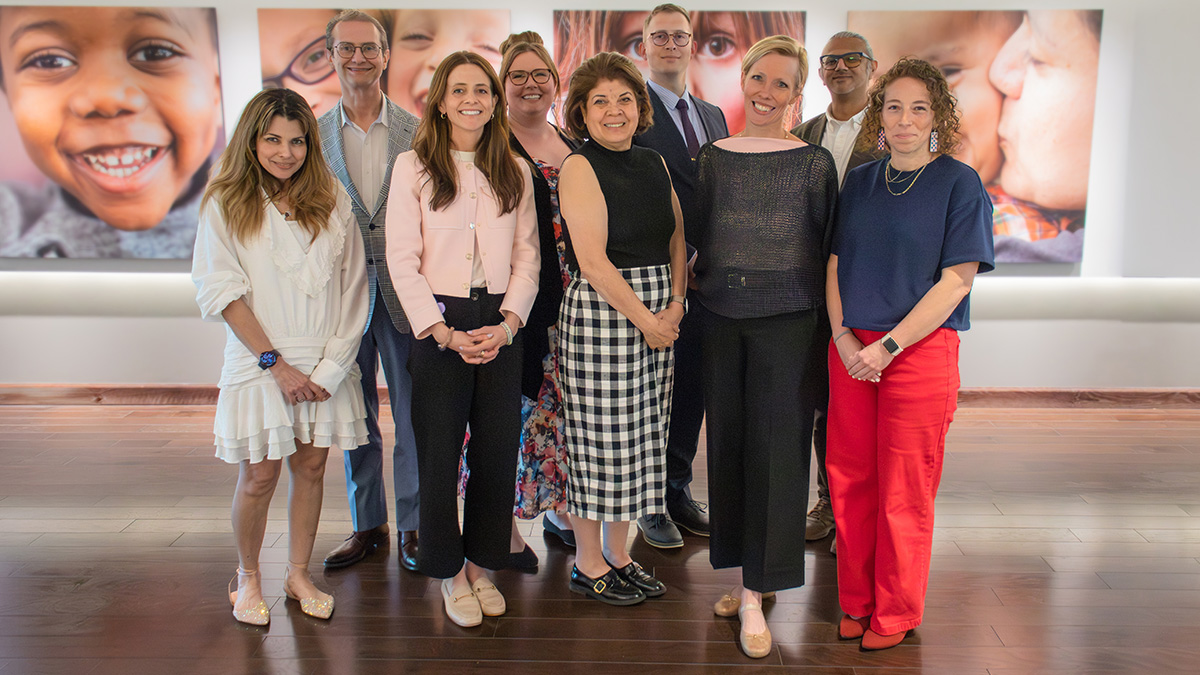
In April, Barron, Raleigh Smith Duttweiler, and Becca Garrison from the National Military Family Association (NMFA) joined the Institute’s Applied Research team for a data camp.
NMFA advocates for military families, including those in active service, veterans, and retirees, and amplifies their voices for policymakers. They provide opportunities like Operation Purple Camp for military kids and military spouse scholarships.
Buffett Institute and NMFA teams have access to different data sources that can be used to analyze issues, including:
- Military child care supply and where shortages exist
- The early childhood workforce in and around military bases
- How workforce development for military spouses could help build the early childhood workforce
- How to better support the physical, mental, emotional, and financial well-being of military families and child care providers serving military families
“Bringing these datasets together allows us to uncover critical insights into military child care gaps that neither organization could identify alone,” said Alexandra Daro, the Institute’s director of applied research. “This kind of targeted research is essential for understanding how to address the challenges faced by military families—frequent relocations, food insecurity, and high spousal unemployment. These are problems faced by many families and are made unique by the stresses of military life. We need to understand how they intersect with early childhood needs to inform stronger policy solutions.”
Erin Duffy is the managing editor at the Buffett Early Childhood Institute at the University of Nebraska and writes about early childhood issues that affect children, families, educators, and communities. Previously, she spent more than a decade covering education stories and more for daily newspapers.