

Child care and economics are deeply intertwined. Whether parents can access—and afford—child care can impact their household income and lifelong earnings, not to mention local employers and the overall labor market.
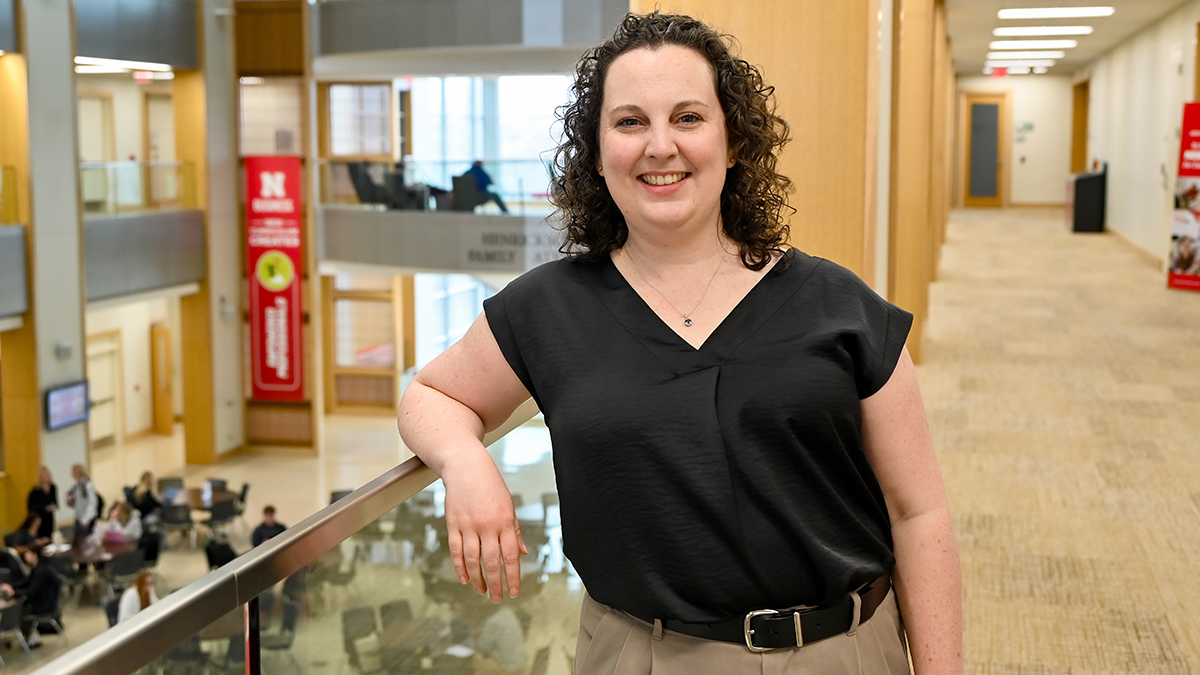
We spoke with Rebecca Jack, a Ph.D. student in economics at the University of Nebraska-Lincoln, about her interest in connecting child care with economics.
This interview has been lightly edited for length and clarity.
Q. Can you describe your research work?
A. I am a labor economist studying parents and children, and policies and systems that impact them. This includes studying child care, schooling, parental leave, and the gendered career paths parents face.
Q. Why did you become interested in child care, especially as a student studying economics?
A: I am a mom to three incredible kids, so I know firsthand how hard it is to balance a demanding career with being a parent. Pursuing a Ph.D. has only been possible because of the many wonderful child care providers who have cared for my kids over the years. Combining my personal experience with my interest in gender economics naturally led to questions about how the availability of child care and related policies impact parents' ability to work and the disproportionate burden placed on mothers.
Q. What has been the conversation around child care in the economics field?
A: Child care is an incredibly important system for our economy to function well. Child care is expensive and hard to access, so some parents work less than they would like to or are forced out of the labor force even when they would prefer to work.
This is especially true for women, who we see earning and working less after they become mothers. For those who want to work, moving to part-time work or opting out of the labor force has lifelong costs. A robust, affordable child care system helps address this issue by giving children a safe place to learn and grow while their parents are at work. Economics research shows that when families have more child care, mothers work and earn more.
Q. How has your time at the University of Nebraska benefited your work and you professionally?
A. The UNL Department of Economics has been very supportive of my work. I have had the opportunity to collaborate and coauthor with a number of faculty during my time here, which has been a huge benefit. The university is also home to the Central Plains Federal Statistical Research Data Center, which gives researchers the opportunity to use restricted-access data from the Census Bureau and other federal agencies. This resource has been incredibly important for my research, and I feel very lucky to be able to have it on campus.
Q. Can you talk about your involvement in the 2024 economics and child care roundtable in Omaha and that work?
A. I was invited to attend the national roundtable in October 2024 to discuss child care-related policies and economists' perspectives on child care in the United States. There was a wide variety of backgrounds present, and we reached a main consensus that our society needs to invest more in child care because the current system isn't working for many parents, child care providers, and children.
One of the things that stood out the most to me as a researcher is that there is a need for more data on child care. Research starts with data, and while various government agencies have done important work building child care-related datasets, there are still more open research questions that can't be answered without more data.
Q. What kind of problems and solutions exist when it comes to snow days and sick days (or child care in general) as it relates to the economy?
A. It is important to consider the gendered nature of this issue. Data show that mothers spend more time on caretaking tasks than fathers do, and this is especially true for unexpected child care needs.
For example, one of my papers looks at the impact of sick days and snow days on parents' time spent working, and we show that moms take on the bulk of the extra child care burden that comes from those types of disruptions. This burden potentially carries lifetime costs, including slower career growth and lower retirement savings.
Child care is expensive to provide, and many of our systems put the cost entirely on parents. For younger children, we require small child-provider ratios, meaning that child care is a labor-intensive—and therefore expensive—field. If we recognize there are positive externalities to society from child care, such as improved developmental outcomes for children and increased tax revenue from a larger workforce, then economic theory would suggest we subsidize child care, making it cheaper and more accessible for families.
Q. What kind of future do you envision for child care that would support children and working mothers, and the economy?
A. Both children and parents benefit from the availability of child care. I would love to see a more robust child care system nationwide where every parent who would like child care has access to an affordable spot. As a society, we still need to figure out the best ways to fund and provide these systems, but I think we'll learn a lot from places like New Mexico and New York City, which are currently implementing universal child care systems. I'm excited to see where both research and policy go in the future.
Erica Sesay is the senior communications manager for statewide engagement at the Buffett Early Childhood Institute.